QORA in the field: four jobs your cameras can already do
Most sites don’t need more cameras. They need the cameras they already have to actually watch — and to speak up only when something matters. QORA is the layer that does that: it reads your existing feeds, flags the handful of moments a human should see, and puts them in one place. Here are four everyday security jobs and exactly how QORA handles each.
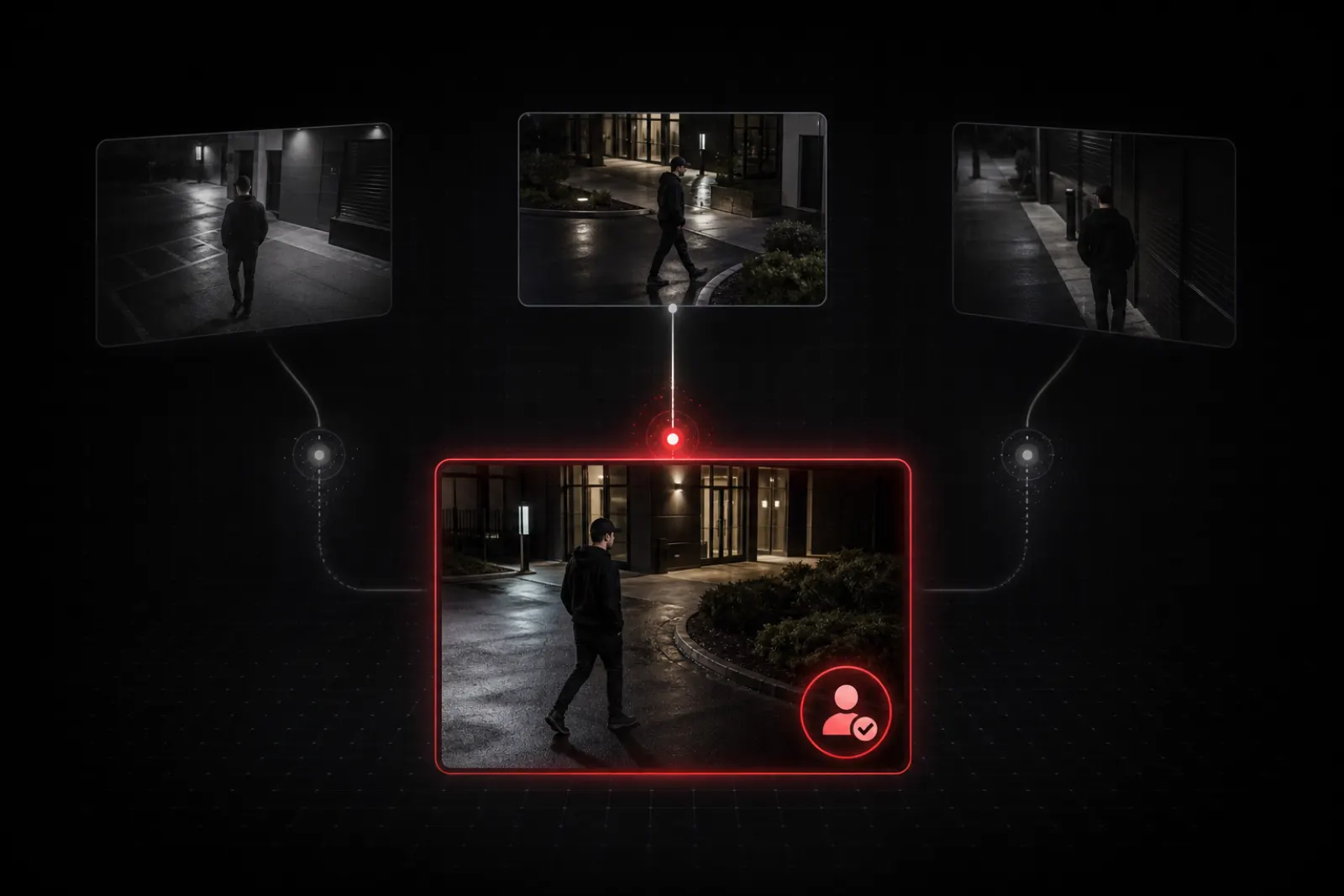
A quick note before the jobs: QORA doesn’t replace your cameras, your recorder, or your guards. It layers on top of what’s already bolted to the wall. The camera stays; the operator stays; QORA does the watching in between, so the operator isn’t staring at sixteen quiet feeds waiting for one to go wrong.
Job 1 — “Someone’s in the yard at 2 a.m.”
After hours, a warehouse perimeter is supposed to be empty. The failure mode of traditional CCTV is that it records the intrusion perfectly — and nobody sees it until the next morning, when the laptops are already gone.
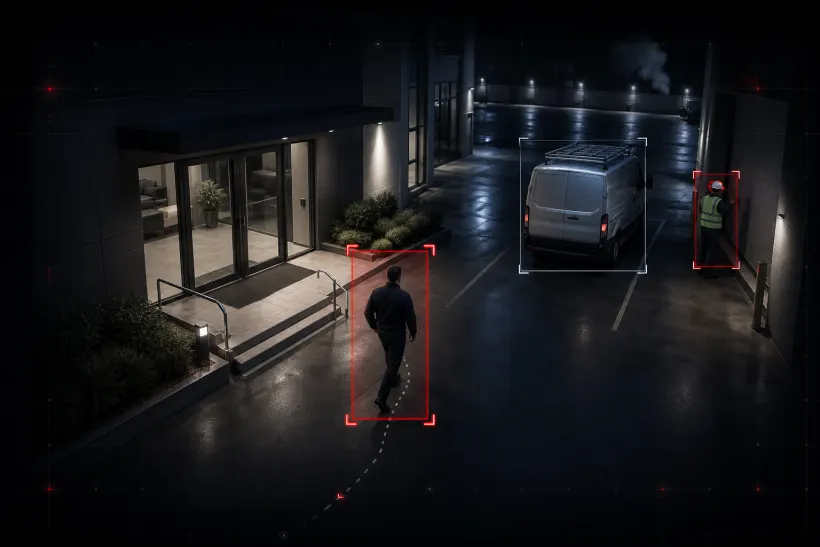
How QORA handles it. It watches the perimeter feeds continuously and separates the things that matter — a person, a vehicle — from the things that trip cheap motion alarms all night: swaying trees, rain, passing headlights, an animal. When it sees a person where a person shouldn’t be, it raises one alert with the clip attached and routes it to whoever is on call. The operator gets a reason to look, not a motion-alarm that cried wolf forty times last night.
Job 2 — “Who just pulled up to the gate?”
Loading docks and gated yards live and die by vehicles. Which truck is expected? Which one isn’t? Today that’s a guard squinting at a plate and a clipboard, or a log nobody fills in consistently.
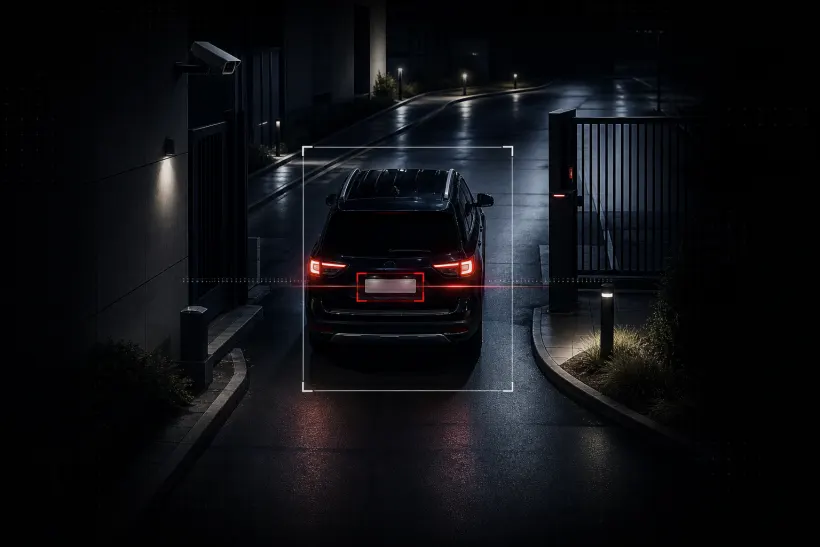
How QORA handles it. It reads plates at the gate and keeps a clean, timestamped log of every vehicle in and out — no clipboard, no manual entry. Known and expected vehicles pass quietly; anything unrecognized, or anything on a watch list, becomes an alert instead of a line item nobody reads. When something does happen, “which vehicles were on site between 1 and 3 a.m.?” is a search, not an overnight review of tape.
Job 3 — watching the place without watching the people
Plenty of sites want better monitoring but are rightly wary of turning every camera into a surveillance dragnet on their own staff. Retail floors, workplaces, and mixed-use sites need the security value without the privacy cost.
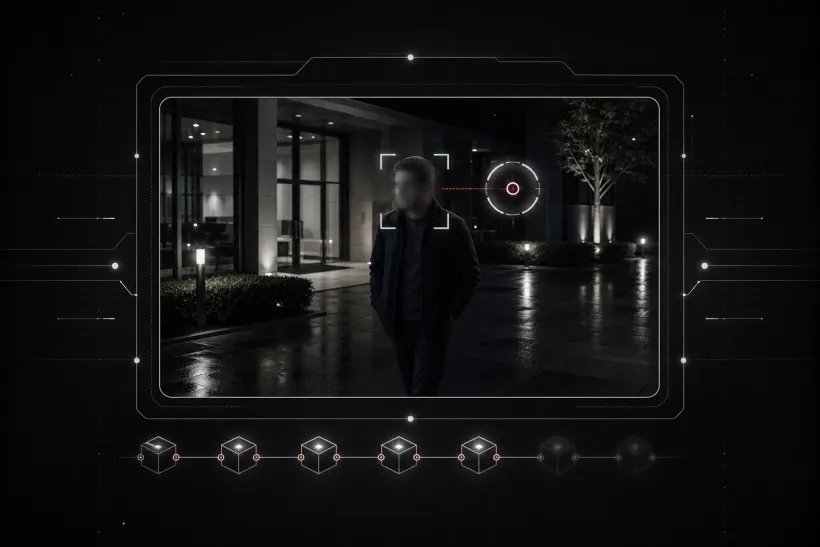
How QORA handles it. Footage is processed on-site rather than shipped wholesale to someone else’s cloud, and the product is designed to surface events — “a person entered the restricted bay” — not a running feed of identifiable faces for someone to scroll. The default posture is minimal: keep what’s needed for the alert, not a permanent dossier on everyone who walked past a lens. Security teams get the signal; the people on camera keep their dignity.
Job 4 — turning sixteen feeds into one queue
The three jobs above share a punchline: none of them is useful if the output is just more to watch. A site with forty cameras cannot hire forty pairs of eyes. The real product isn’t any single detection — it’s the console that collapses all of them into one prioritized queue of things that actually need a human.
That’s the operator view at the top of this post. Instead of a wall of quiet feeds, an operator sees a short list: what happened, where, when, with the clip. They confirm, dismiss, or dispatch. One person can cover a site that used to need a room full of monitors — and they spend their attention on decisions instead of scanning.
Where the human stays in charge
Notice what QORA does not do in any of these jobs: it doesn’t lock a gate, call the police, or decide someone is a threat on its own. It detects, it flags, it hands a human the clearest possible version of “here’s the thing, here’s the context” — and a person makes the call. That’s deliberate. Physical security is exactly the domain where an automated system should be fast at spotting and humble about deciding. AI does the triage; a person does the dispatch.
Who it’s for, plainly
- Warehouses, yards, and logistics sites with a perimeter that goes quiet after hours.
- Facilities with gated vehicle access and a loading dock that needs a real arrival log.
- Multi-site operators tired of paying for monitoring that only helps after the incident.
- Any team that has the cameras already and just wants them to earn their keep.
QORA is in private beta, piloting at live warehouse sites right now. If any of the four jobs above is one you’re doing the hard way today, see how QORA works or ask about a pilot — we usually reply within 48 hours.